Blog
Why Confidentiality in Legal Translation Is a Must-Have for Attorneys?
As an attorney, how certain are you that your chosen
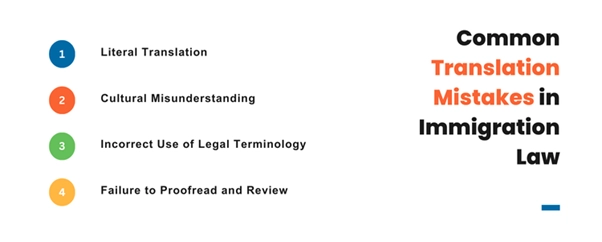
While translating word-for-word might seem like a path to objectivity, it often fails spectacularly in a legal context. Legal concepts and terms frequently lack direct equivalents across languages and legal. Phrases like “burden of proof,” “admissible evidence,” or “credible fear” carry the specific weight of particular legal systems that literal translation cannot capture. Relying on it risks distorting the intended legal meaning.
As Lexology points out, translating legal language without considering the target language’s legal system can create critical misunderstandings, jeopardizing your client’s case. You need translators who grasp the legal concepts behind the words, not just the words themselves.
Immigration law inherently involves bridging cultural divides. What is understood or implied in one cultural context may not translate directly or may even be misinterpreted in another. This applies not only to language but also to documentation conventions, communication styles, and understanding of legal processes. A translator unaware of these nuances can inadvertently cause miscommunication or produce documents that seem alien or incorrect to officials.
ResearchGate identifies cultural misunderstandings as a significant source of legal translation errors. Without proper cultural context, translations can mislead officials or disadvantage your clients.
Immigration law has its own highly specialized vocabulary. Mistranslating terms like “asylum,” “removal proceedings,” “adjustment of status,” or “waiver” can have immediate and severe legal consequences. Using a general translator without specific legal and ideally immigration law expertise is a major risk.
According to Novo Legal, the incorrect translation of specific legal terminology is a common and damaging error in the immigration process. [Reference: Novo Legal] Ensure your translators are proficient in the precise legal language relevant to your client’s situation.
Even experienced translators can make mistakes. Treating the first draft of a translation as final is a gamble. Failing to implement a thorough proofreading and review process leaves your client vulnerable to overlooked errors – typos, grammatical mistakes, inconsistent terminology, or subtle inaccuracies. A crucial best practice is to have translations reviewed, ideally by a second qualified translator or a bilingual legal professional, before submission.
Now that you know what to avoid, how can you ensure your documents are translated accurately?
Prioritize working with professional translators specializing in legal translation, particularly in immigration. Certifications or demonstrated experience in translating legal documents provide greater assurance of their understanding of complex terminology and legal concepts.
Machine translation (MT) tools like Google Translate have improved, but are not suitable for the sole translation of critical legal documents. They lack the nuanced understanding of legal concepts, cultural context, and the potential consequences of error. MT can potentially be used as a preliminary tool by a professional translator, but must always be followed by thorough human review, editing, and validation by a qualified expert.
If your firm employs bilingual attorneys or paralegals proficient in the relevant language, leverage their expertise. They can review translations for legal accuracy, ensure terminology is used correctly within the legal context, and spot nuances a non-lawyer translator might miss.
For recurring terms specific to your practice or common in immigration law, create a bilingual glossary. This ensures consistency across multiple documents and translators, improves efficiency, and reduces the risk of terminological errors.
As an immigration attorney, your clients entrust you with their future. Protecting their rights includes ensuring the absolute accuracy of all translated materials submitted on their behalf. By actively avoiding common translation mistakes, partnering with specialized legal translators, implementing rigorous review procedures, and leveraging all available linguistic resources, you uphold your professional duty and provide the highest standard of representation. Accurate translation is not an administrative hurdle; it is a cornerstone of effective advocacy in immigration law.
Need reliable, accurate legal translation services tailored for immigration law? Contact Cesco Linguistic Services. Our certified legal translators specialize in immigration matters, ensuring the precision, confidentiality, and quality your cases require. Protect your clients and your practice with expert translation support. 
Cesco Linguistic Services was founded on August 4, 2004. Our passion is to facilitate Human-to-Human understanding in meaningful and rewarding ways through the power of language.
As an attorney, how certain are you that your chosen
Legal translation can make the difference between a client winning

As a global supply chain manager, you already know how
Could a Simple Translation Error Jeopardize Your Client’s Future?